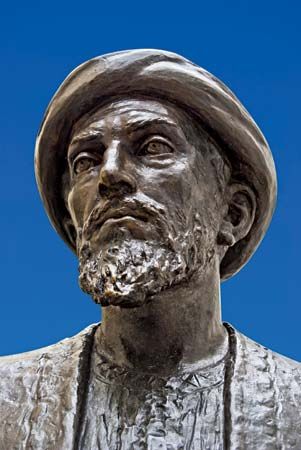
In the quest for a life well-lived, humanity has long sought guiding principles that transcend fleeting trends. Among the most profound and enduring of these is The Golden Mean, an ancient ethical concept primarily championed by the venerable Greek philosopher, Aristotle. Far from a mere call for moderation, Aristotle's Golden Mean offers a sophisticated blueprint for cultivating virtue, achieving balance, and navigating the complexities of existence with wisdom and grace. It's a pathway not just to 'being good,' but to flourishing as a human being.
Aristotle's Golden Mean: The Pursuit of Virtue Through Balance
Aristotle, in his seminal work, Nicomachean Ethics, laid the foundational understanding of The Golden Mean. For Aristotle, virtue (arete) wasn't an innate quality or an extreme act, but a disposition to behave in the right manner as a mean between two vices – one of excess and the other of deficiency. He posited that true moral excellence lies not in the extremes, but in finding the appropriate middle ground relative to each individual and situation.
Consider the classic example of courage. This virtue, according to Aristotle, is the mean between two vices: cowardice (a deficiency of courage) and recklessness (an excess of courage). A coward flees from all danger, unable to face necessary challenges. A reckless person, conversely, rushes headlong into danger without proper consideration, often to their detriment and the detriment of others. The courageous individual, however, assesses the situation, acknowledges fear, and acts appropriately, facing danger when necessary and retreating when prudent.
Other virtues follow a similar structure:
- Temperance: The mean between insensibility (deficiency, lack of pleasure or desire) and self-indulgence (excess, excessive pursuit of pleasure).
- Generosity: The mean between stinginess (deficiency, unwillingness to give) and prodigality (excess, wasteful or extravagant giving).
- Modesty: The mean between shamelessness (deficiency, lack of proper restraint) and bashfulness (excess, excessive shyness or embarrassment).
What makes Aristotle's Golden Mean particularly powerful is that it isn't a rigid, mathematical average. It's a relative mean, meaning what constitutes the "right" amount can vary depending on the individual, the circumstances, and the specific context. This brings us to the crucial role of practical wisdom.
Beyond Simple Moderation: Cultivating Practical Wisdom (Phronesis)
It would be a misunderstanding to equate The Golden Mean with mere "middle-of-the-road" thinking or bland compromise. Aristotle emphasized that finding this virtuous mean requires more than just avoiding extremes; it demands a sophisticated intellectual virtue he called phronesis, or practical wisdom. Phronesis is the ability to deliberate well about what is good and advantageous for human life in general, and for oneself in particular.
Practical wisdom is what allows an individual to correctly perceive the mean in any given situation. It's not a theoretical knowledge but an experiential one, developed through:
- Experience: Learning from past successes and failures.
- Reflection: Analyzing situations, understanding motivations, and assessing outcomes.
- Empathy: Considering the perspectives and needs of others.
- Moral Education: Cultivating a good character from a young age, allowing one's feelings and desires to be aligned with reason.
A truly virtuous person, guided by practical wisdom, doesn't just *know* what the right thing to do is; they *feel* it and are inclined to *do* it. This nuanced understanding elevates The Golden Mean from a simple rule to a profound process of character development. It asks us to be active agents in our own moral formation, constantly observing, learning, and refining our responses to the world.
Applying the Golden Mean in Modern Life: A Practical Blueprint
In our fast-paced, often polarized modern world, The Golden Mean offers an invaluable framework for personal growth and ethical decision-making. Its principles can be applied to nearly every facet of contemporary life, helping us to navigate challenges and build a more fulfilling existence.
Practical Applications:
- Work-Life Balance: In an era of demanding careers and always-on connectivity, finding the mean between workaholism (excess) and sloth/under-commitment (deficiency) is crucial. The Golden Mean encourages dedicated effort and ambition, balanced with adequate rest, leisure, and personal relationships, leading to sustainable productivity and well-being.
- Digital Consumption: The digital age presents a new set of extremes. The mean lies between obsessive scrolling and screen addiction (excess) and complete digital isolation (deficiency). A balanced approach involves leveraging technology for connection and information while maintaining real-world interactions and digital detox periods.
- Financial Habits: The mean in finances is between frugality bordering on miserliness (deficiency) and reckless extravagance (excess). It advocates for mindful spending, wise saving, and responsible investment, allowing for both current enjoyment and future security.
- Emotional Regulation: In personal relationships, managing emotions according to the mean means avoiding emotional suppression (deficiency) and overly dramatic or uncontrolled outbursts (excess). It encourages healthy expression, empathy, and seeking constructive resolutions.
- Health and Wellness: A healthy lifestyle means finding the balance between extreme asceticism or deprivation (deficiency) and excessive indulgence (excess) in diet, exercise, and habits. It's about moderation and sustainable choices for long-term well-being.
Tips for Embracing The Golden Mean:
- Self-Reflection: Regularly assess your habits and reactions. Are you leaning towards an extreme? Where do you tend to overdo or underdo things?
- Seek Feedback: Ask trusted friends or mentors for their honest observations about your character and behavior.
- Observe Role Models: Identify individuals who embody virtues you admire and observe how they navigate similar situations.
- Practice Gradually: Like any skill, cultivating virtue through the mean takes practice. Start with one area and make small, consistent adjustments.
- Embrace Imperfection: The goal isn't immediate perfection, but continuous improvement and the striving for the mean in an ongoing journey.
The Enduring Legacy: Aristotle's Influence and Universal Resonance
Aristotle’s articulation of The Golden Mean has had an indelible and profound impact on Western ethical thought, shaping moral philosophy, literature, and societal norms for millennia. His ideas on balanced living and the cultivation of virtue continue to be studied, debated, and applied by thinkers across disciplines.
While Aristotle meticulously articulated The Golden Mean for Western philosophy, its core wisdom resonates across a multitude of global traditions. Indeed, the principles of seeking balance and avoiding extremes are not unique to ancient Greece, but form a cornerstone of human flourishing universally. To truly appreciate this pervasive wisdom, one might explore The Golden Mean: Universal Wisdom Across Cultures and Religions, which delves into its manifestations in Eastern philosophies like Buddhism's Middle Way, Confucianism's Doctrine of the Mean, and Islamic Al-Wasatiyah. Further understanding the intricate relationship between ethics, extremes, and the path to a fulfilling life can be found in Exploring The Golden Mean: Ethics, Extremes, and Enlightened Life, which expands on the practical application of this profound concept in various contexts.
This widespread adoption underscores that the search for a virtuous middle path is not merely an intellectual exercise but an intuitive human response to the challenges of living well.
The Golden Mean, as envisioned by Aristotle, remains a timeless and profoundly relevant blueprint for balanced, virtuous living. It challenges us to move beyond simplistic judgments, to engage with our moral compass, and to cultivate the practical wisdom necessary to thrive. By consciously seeking the mean between deficiency and excess, we not only foster individual excellence but also contribute to a more harmonious and ethical society. Embracing this ancient wisdom allows us to become active architects of our character, steering our lives towards genuine flourishing and enduring well-being.